
Veterinary Dentistry
Dental Care you can Trust
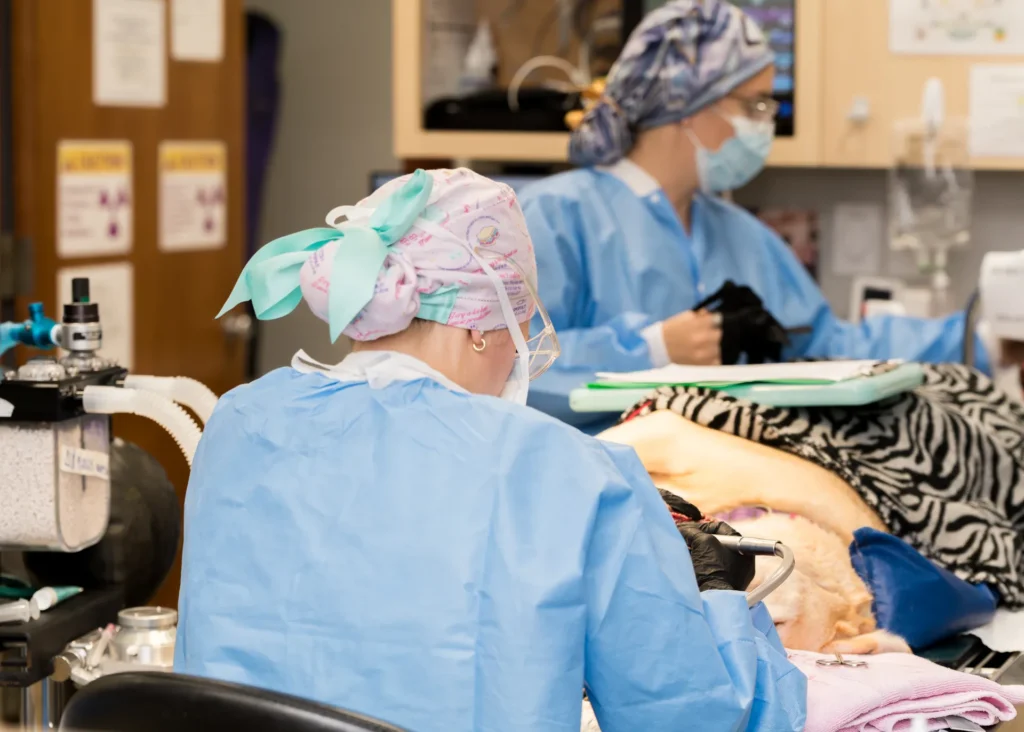
Going to the dentist as a dog or cat is much like it is for us. There’s tartar to clean, teeth to check, and hidden problems to catch early. But there’s one big difference: our pets need to be under anesthesia to safely and thoroughly perform dental procedures.
We understand that the idea of anesthesia can feel intimidating. Your pet is a beloved family member, and it’s natural to feel some worry. That’s why we’re here to walk you through every step of the process, explain why it’s necessary, and most importantly, to provide safe, gentle care that supports your pet’s health and comfort.
What does this mean for you and your pet?
Dental disease is the leading cause of liver, kidney, and heart disease in cats and dogs, and it often begins silently. By age 3, most pets show signs of dental disease, even if they appear perfectly healthy. Left untreated, it can lead to chronic pain, tooth loss, and life-shortening complications.
Just like humans, pets need annual dental exams to catch problems early and stay ahead of disease. Unlike humans, they can’t tell you when something hurts, so prevention is key.
We combine advanced techniques with gentle, Fear Free handling to make your pet’s dental experience as comfortable and safe as possible. Our goal is to keep your pet healthy, happy, and smiling for years to come.
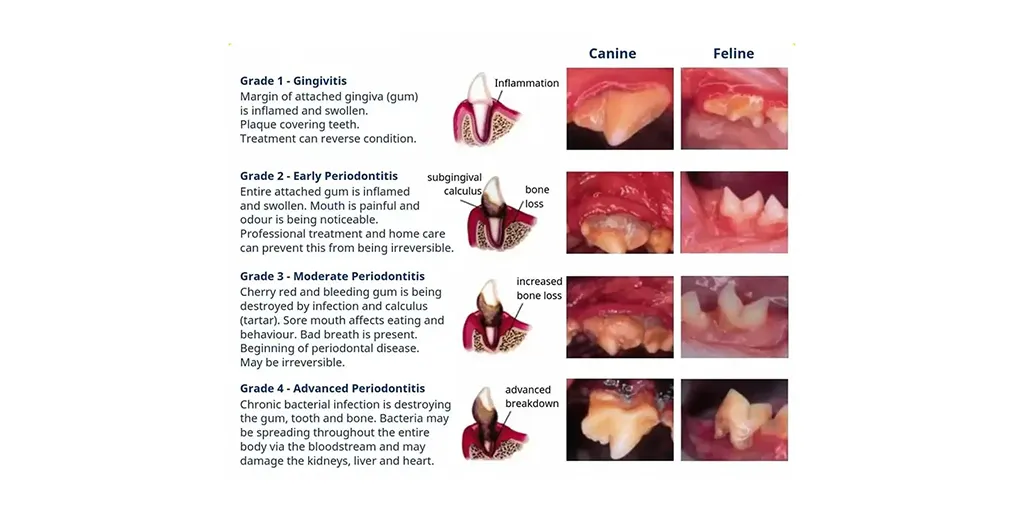
Below or Above, a chart outlines the different levels or grades of dental disease progression in dogs (canines) and cats (felines). By staying current on annual dental exams and cleanings, you can help prevent advanced dental disease and keep your pets “all smiles”.
What to expect from your pet’s dental procedure?
Before the Dental Exam (While your pet is awake):
We complete an oral exam to look for visible signs of:
- Tartar and plaque build up
- Bad breath
- Red, swollen gums
- Loose, broken, or missing teeth
- Facial swelling or signs of pain when touching the mouth
- Oral masses, lumps, or unusual growths
- Drooling
During the Dental Exam (While your pet is under anesthesia):
- More detailed full-mouth exam including Dental X-rays (Digital Dental Radiography):
These high-resolution dental X-rays let us examine your pet’s teeth and jaw beneath the surface, helping detect hidden infections, fractures, or root disease to give a more complete picture of your pet’s oral health.
- Dental Charting- a detailed “map” of your pet’s mouth that allows technicians and the veterinarian to record findings for each tooth
- Removal of tartar and plaque from the tooth’s surface and buildup below the gumline
- Polishing teeth to help prevent future buildup
- Fluoride or protective treatments
After the Dental Exam
- We are there to ensure your pet wakes up to a familiar face.
- We will discuss our findings with you and provide a customized treatment plan (if necessary).